Tools for Insight, Change, and Innovation
The story goes something like this…
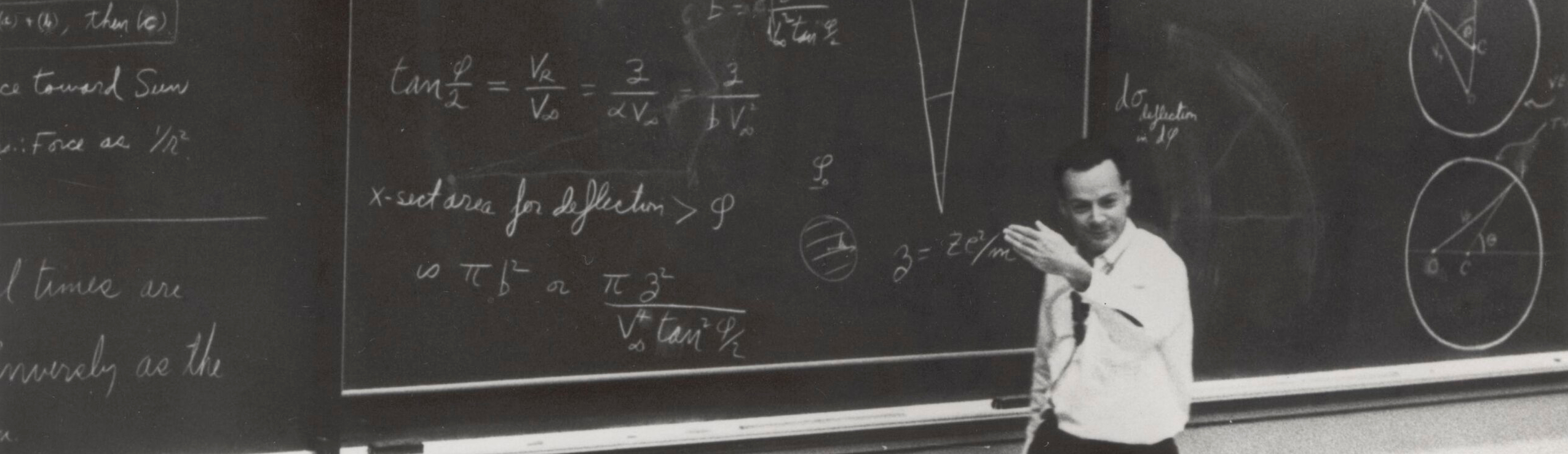
Richard Feynman was once asked, “Dick, explain to me, so that I can understand it, why spin one-half particles obey Fermi–Dirac statistics.” To which Feynman replied, “I’ll prepare a freshman lecture on it.” But he returned a few days later to say, “I couldn’t do it. I couldn’t reduce it to the freshman level. That means we don’t really understand it.”
For anyone who has a copy of The Feynman Lectures on Physics , it is immediately apparent how talented a teacher Richard Feynman was, and why this story has entered our collective psyche as a kind of parable. This guy could teach. His lectures are part symphony, part physics, with the whole greater than the sum of its parts. For Feynman, the inability to explain an idea clearly was not a failure of communication, but a recognition of incomplete understanding. Clarity, in this sense, becomes inseparable from insight.
James Burke in his series Connections1, explores a complementary theme: that understanding often arises not from a linear exposition of isolated facts, but from recognizing relationships across domains, eras, and contexts. Tracing the genesis of an idea as it evolved facilitates deeper comprehension. In both cases, explanation serves as a test of comprehension; reframing becomes a means by which deeper, fundamental structures are revealed and made manifest, rather than merely simplifying surface details.
In the tradition of Connections by Burke, this lecture series explores nonlinear relationships among ideas across time, culture, and discipline. It examines how ideas from ancient Greek and Chinese thought, with detours through media theory, graphic design, visualization, philosophy, ancient rituals, narrative storytelling, and complexity theory, come together to inform the way we perceive and attend the world around us. Rather than presenting a linear history or a unified framework of how ideas emerge, the series treats knowledge as a network, in which shifts in perception, attention, and framing play a decisive role in how problems are understood and solutions emerge.
Innovation, in this view, is not solely a matter of generating more ideas, but of learning to perceive situations differently, allowing previously invisible connections and possibilities to come into focus. With a deeper understanding of our own modes of perception, we become better equipped not only to think more clearly, but to articulate our ideas and vision more effectively and, ultimately, to communicate across diverse audiences, disciplines, and contexts.
By examining the various paths to innovation and how they emerge, these lectures offer practical tools for engaging confidently with complex challenges in work and everyday life.
The Lectures
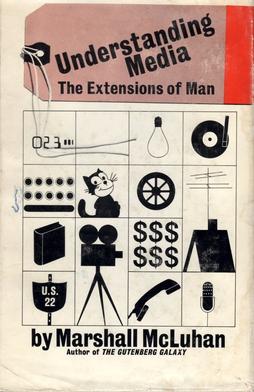
Toward an Architecture of Insight
In this lecture, we explore how ideas from Marshall McLuhan, Andy Clark and David Chalmers, the Zettelkasten method, Atomic Habits, large language models, and even a deceptively simple tomato-shaped timer come together to reveal hidden insights. Often taught as the opening lecture in the series, it offers both a conceptual framework and cognitive tools that can be applied immediately and with effect.

Against Perfection
How a quote, often misattributed to Voltaire, reveals key lessons on the dangers of perfectionsim and its relationship to the Zen Buddhist concept of Wabi-sabi. From there, we explore practical ways to cultivate a mindset comfortable with change, why mammals survived while others did not, what machine learning teaches us about generalization, how phase transitions reshape systems, and why you may want to operate in a landscape with the ominous name: the Edge of Chaos.
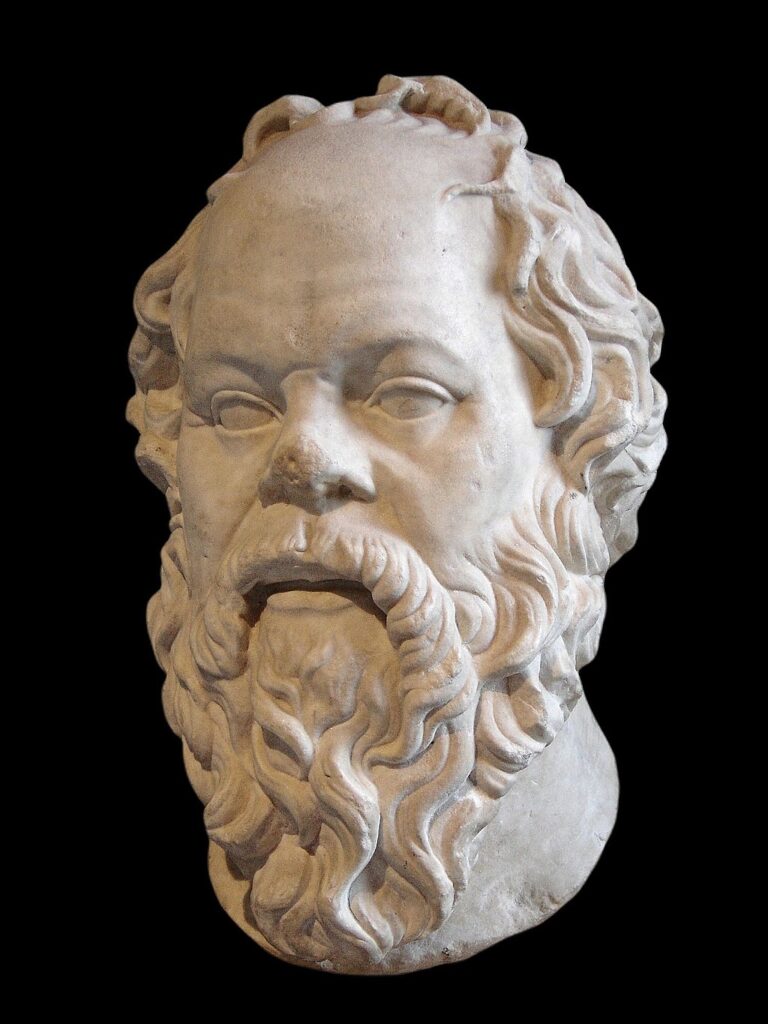
Sh!ft Happens!
Knowing the answer is dependent on asking the right question. Sh!ft Happens explores how inverting a question solved a famine, how a concept developed by the father of the Japanese industrial revolution can still help production engineers at a hedge fund, why subway maps look the way they do, why having at your disposal a suite of mental models can unlock opportunities for investments, and how model selection limits perception.
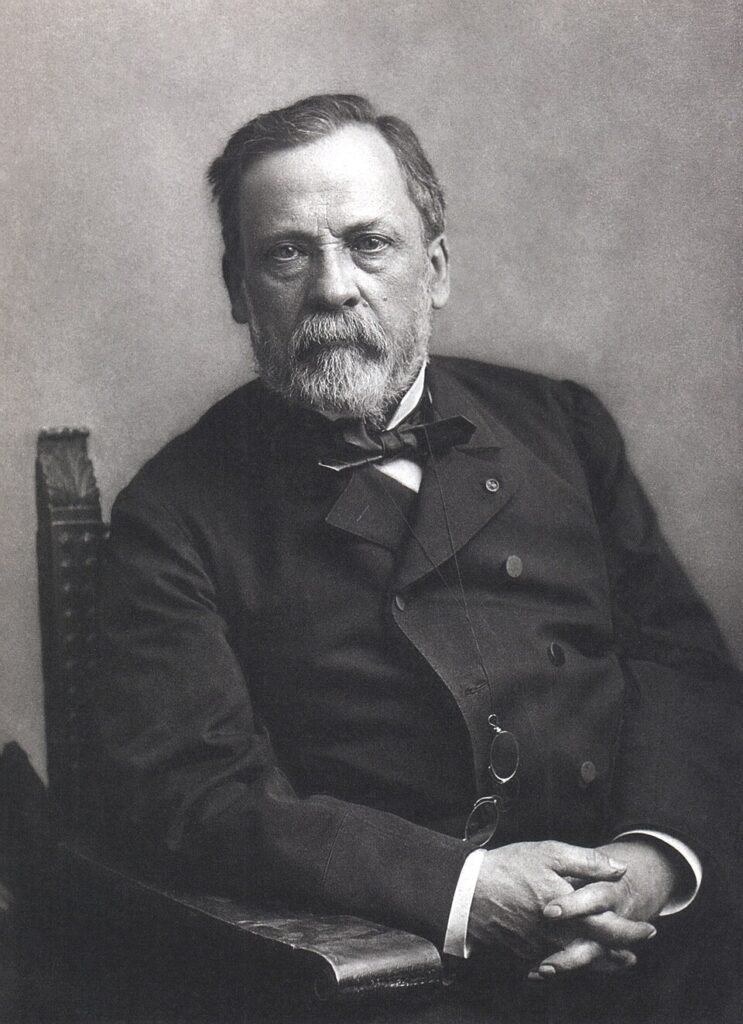
Written Argument and Clarity of Thought
A theme in knowledge is the fuzzy attribution of ideas. Who said it first versus who popularized it? Here we explore a written structure for formal research that Louis Pastuer may (or may not) have been sire to. How sentence pacing can work in the place of punctuation with more effect, our moral obligations, and how separating the creative from the critical phase of writing can uncover what the unconscious mind is trying to tell us.
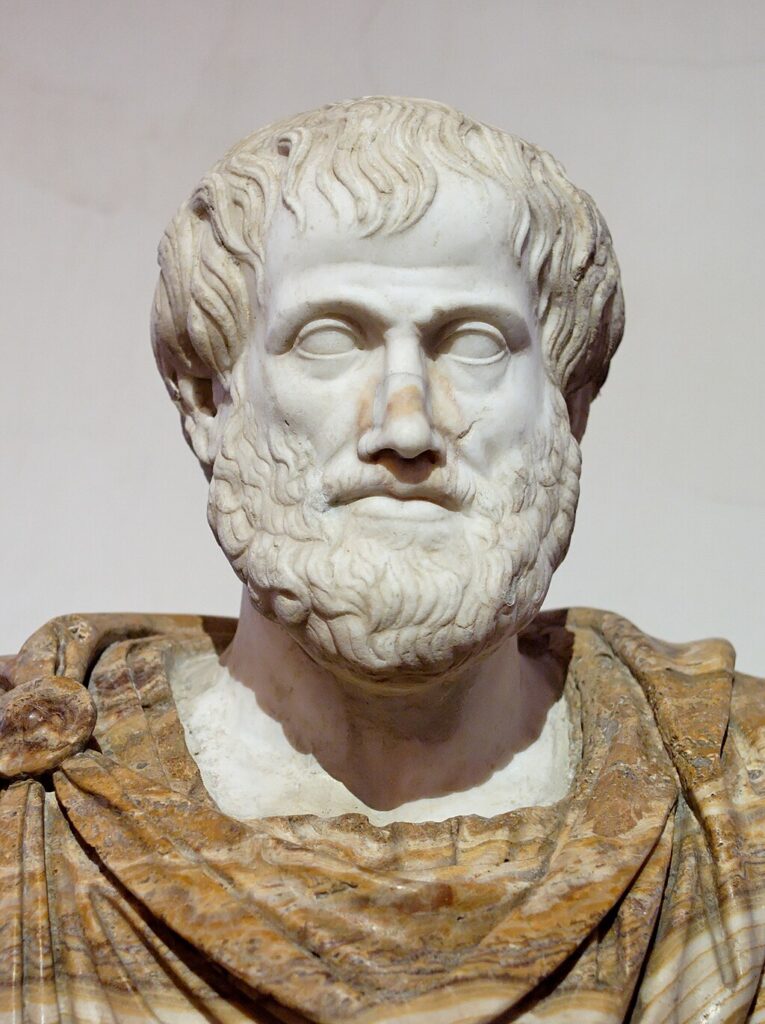
Spoken Presentation and Rhetorical Structure
To this day, we still intuit the rhetorical structures laid out by Aristotle. Today, we have available a new narrative structure that emplolys visual media to enhance compreghension. Counterintuitively, by constraining such tools to a single channel of visual information only, both the presenter and audience can come to deeper understanding of the intended message.
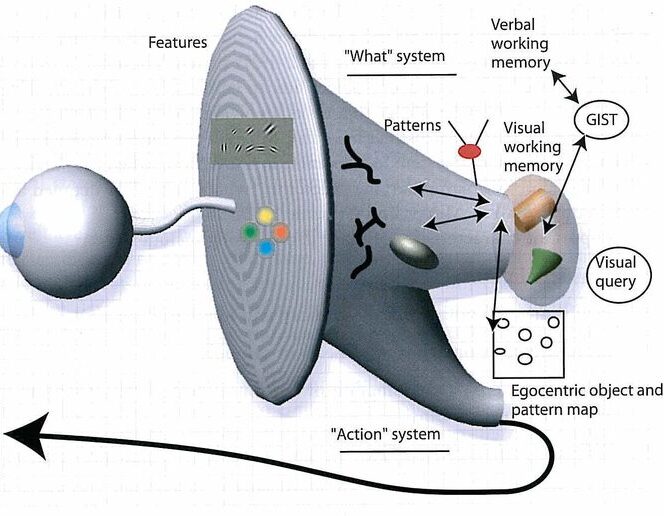
Visual Representation, Perception, and Meaning
For a lecture series on perception, it is only fitting to spend time on the work of Colin Ware. Ware connects the psychology of perception with the biological realities that shape how we perceive and interpret visual information. From Ware, we move to the aesthetics and philosophy of Tufte, and conclude with an exploration of the ethics of visualization.
References
Footnotes
- The first three seasons of the series can be found here in mp4 format.
https://archive.org/details/ConnectionsByJamesBurke/Connections/Season+1/Connections+S01E01+-+The+Trigger+Effect.mp4 ↩︎
Image Sources
- Understanding_Media_(1964_edition): Marshall McLuhan
- Voltaire: Nicolas de Largillière
- Socrate_du_Louvre: Sting, CC BY-SA 2.5
- Aristotle: After Lysippos, Public domain, via Wikimedia Commons
- A-three-stage-model-of-human-visual-information-processing: Colin Ware: nformation Visualization: Perception for Design
- Feynman_lecture_1964_crop: By ENERGY.GOV – HD.3A.053, Public Domain